

Τhe performance was created on the occasion of the 100th anniversary of the Asia Minor Catastrophe.
It was presented by Alas Theatre in May 2022 at the Grotowski Institute in Wroclaw, Poland. Continued at the 104 Theater in Athens and was repeated in November of the same year at Fournos Theater. It was presented in other theaters around Greece.
The performance was held under the auspices of the Federation of Refugee Unions of Greece.
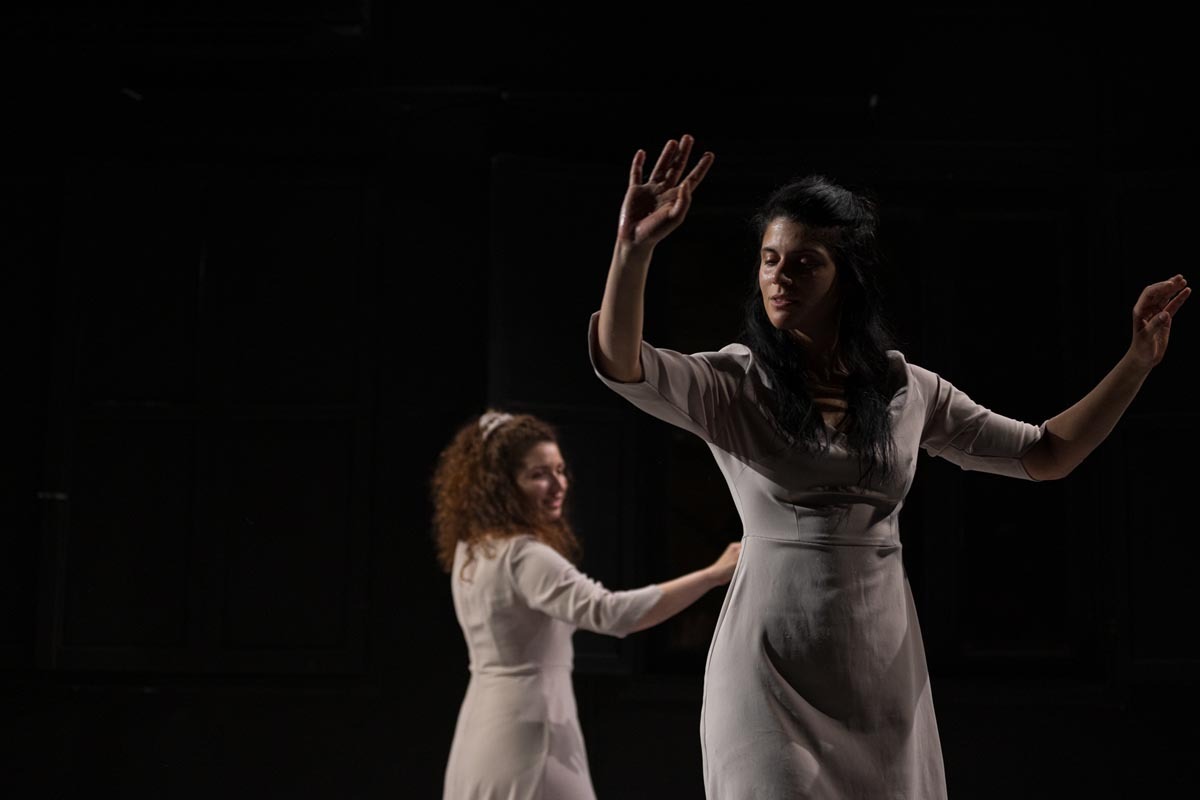
Direction, Performers: Natalia Georgosopoulou, Stavria Nikolaou
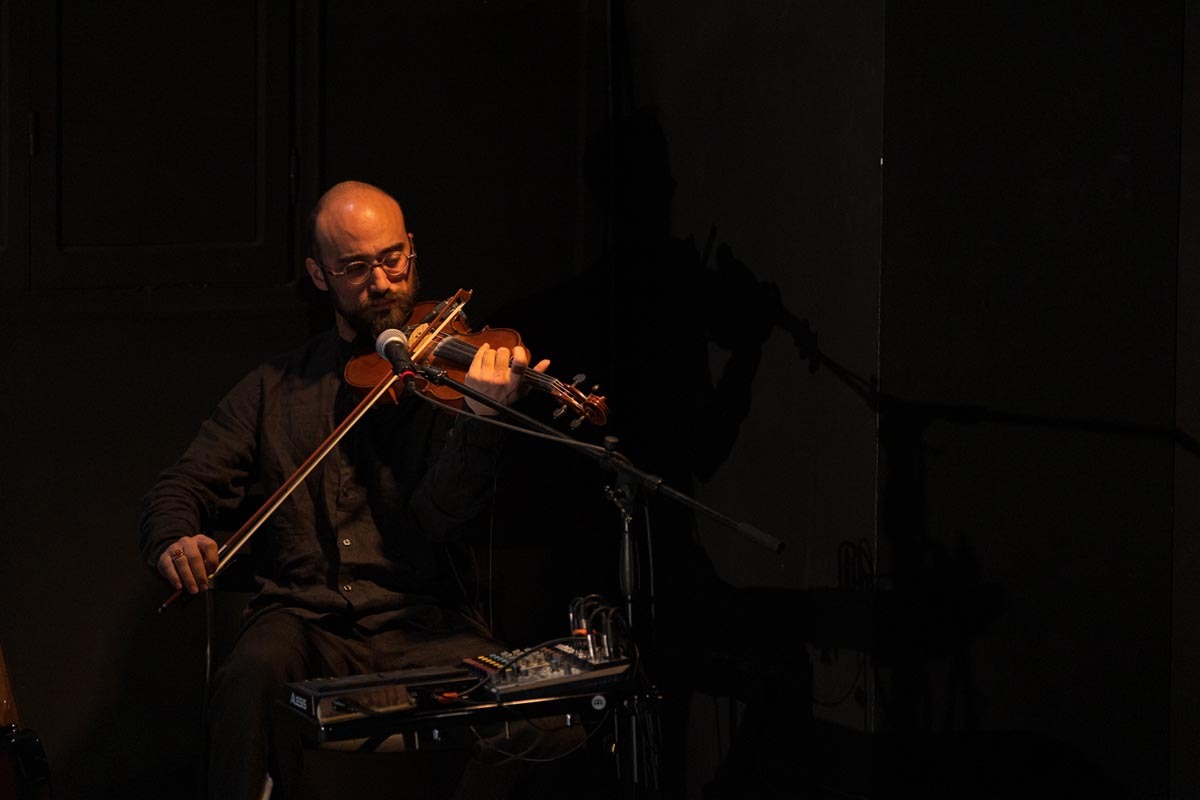
Live music, Sound landscape: Yiannis Ismirnioglou
Scenography/costumes: the group
Photos/ Video:Dimitris Maofis
Trailer: Giannis Aposkitis, Petros Kalfamanolis
Communication:Marianna Papaki, Nontas Douzinas
“One who lost, has of course lost since his birth, lost yesterday and the day before yesterday and today.”
Giannis Kounellis
The catastrophe of Asia Minor marked Greek and world history, not only socially, politically and economically, but also – and mainly- morally. With our eyes wide open to the past, to the drama that Hellenism experienced during its exit from Asia Minor, we try to open the wound that bleeds forever, those traumas of memory that blur history and drown questions in silence.
When a trauma is revealed, many people will try to hide it, to suppress it, to cover it . However, the trauma is still burning. Then, some other voices will be found, saying: “You can not pretend that you didn’t see it, you didn’t smell it, you did not feel the rot.”
Trauma’s memory does not wait for a response – it flows like a rushing river. This river is the souls of all women and men who experienced the tragedy of war: A young mother from Asia Minor, now in exile, trying to stand and survive in a new world, a new land, very different from the one she knew until then. A Greek soldier who was sent to fight miles away from home, leaving behind his family, his life, without knowing why. People who lived together for centuries and became enemies in a spark of a moment.
The fire of Smyrna, the fire of uprooting, which led 1,500,000 Greeks and 500,000 Turks to exile, is indelibly engraved in memory. The questions are torturous and anxious. And what can we do as actors? A historical narration is not enough. Human tragedy unfolds through the eyes, the souls, the bodies of all these humans, from both sides, who experienced the pain, the mourning, the uprooting. That is why the whole history of civilization is nothing but a gray area devoid of perpetrators and victims, guilty and innocents. We attempt a journey in these gray zones, carving the memory of the trauma. Maybe this is a way to move forward, to establish our homes, to find our existence in time.
Photos by Dimitris Maofis






Laboratorium Ινστιτούτο Γκροτόφσκι Βρότσλαβ Πολωνία
Photos by Joanna Kurzyńska


